
Licensed in Texas

Texas DSCR loans.
Rental income, not personal tax returns.

A Texas DSCR loan is a mortgage for a Texas rental property. Instead of your personal tax returns, W-2s or pay stubs, the lender compares the rent with the property's monthly housing payment, including the property taxes and any special-district assessments. Select programs carry no minimum ratio at all.

3-minute form. No credit pull to start.

Last updated: August 2026

20-25%
Typical down payment
No minimum
DSCR on select programs
40+
Lender network

For investors buying or refinancing in DFW, Houston, San Antonio and Austin, including short-term rentals and LLC or series LLC closings. Send us the address and we price the tax bill the way a lender will - at post-sale appraised value, with any MUD or PID assessment included - then shop it across our lender network and show you the options it fits.

Who it's for

A fit if you're…

  • Buying rental property in DFW, Houston, San Antonio, or Austin
  • Scaling past the conventional financed-property cap
  • Holding Texas rentals in an LLC or a series LLC
  • Refinancing a Texas rental out of hard money or a bridge loan
  • Self-employed, with returns that understate real cash flow

Texas tax-aware underwriting

Property taxes and applicable MUD or PID assessments are considered upfront.

Tax-aware underwriting

We model the investor tax bill at market appraised value, because the homestead cap does not follow the sale.

No homestead cash-out limits

Section 50(a)(6) restrictions apply to a homestead, not to non-owner-occupied rentals, so cash-out DSCR refinances are cleaner here.

LLC and series LLC vesting

Entity closings with a personal guaranty, and no Texas mortgage recording tax on the way in.

Short-term rental programs

Austin, San Antonio, Galveston, and Hill Country revenue accepted by many lenders, subject to local ordinance.

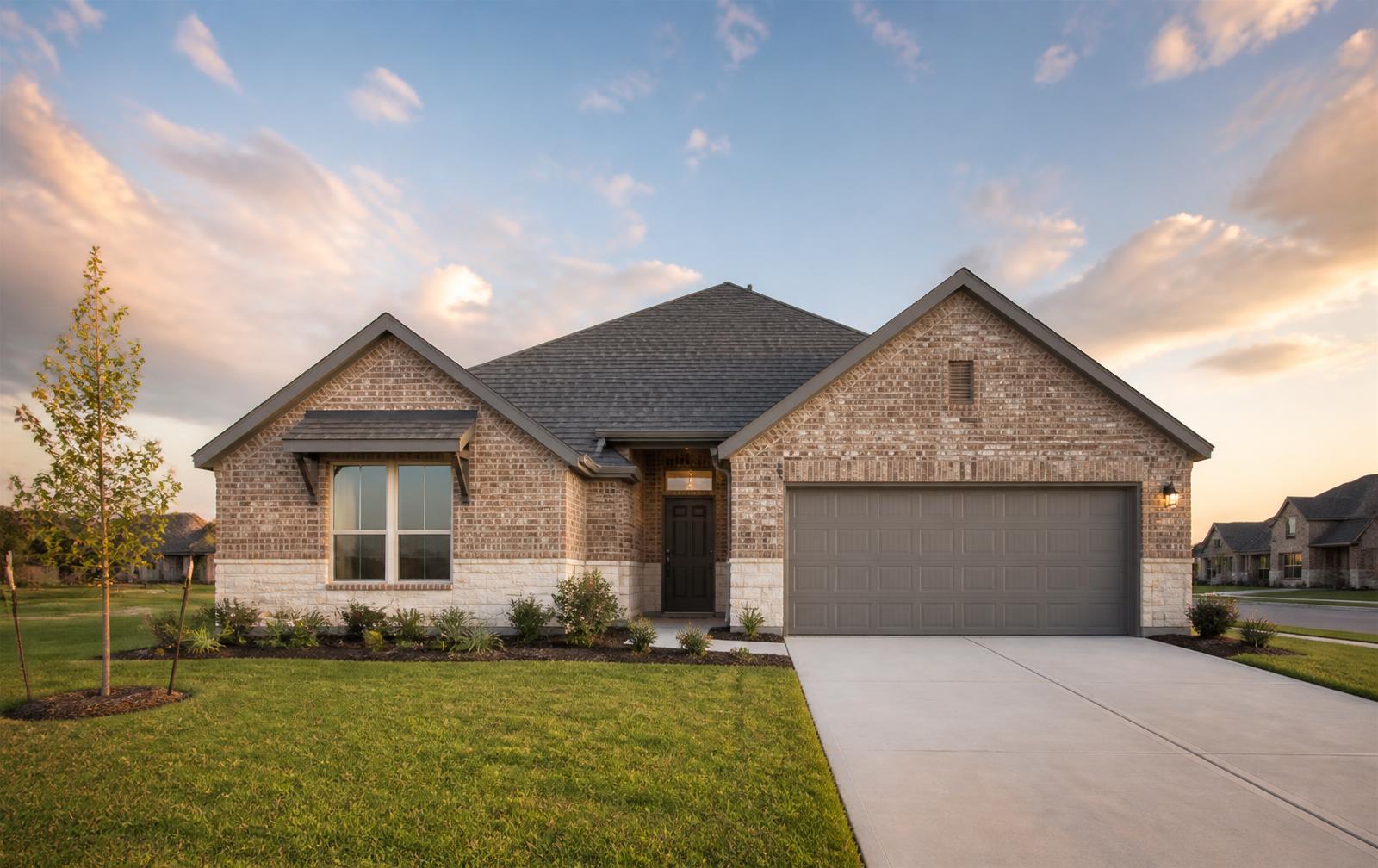
Brick rental home in a Texas master-planned suburban neighborhood
In Texas the property-tax and MUD load inside PITIA often decides the ratio.
DSCR calculator

Will the rent carry the loan?

Target ratio in use: 1.00. Several programs have no minimum DSCR at all up to 75% LTV.

Seeded with a DFW-area rental: taxes at roughly 2.2% of value, which is typical of a Texas suburban tax bill. Try lowering taxes to 1.0% to see how much of the Texas ratio is the tax line rather than the rate.

$
$100k$2M
%
0%50%

Loan amount: $247,500

%
4%12%
yrs
10 yrs40 yrs
$
$0$40k
$
$0$20k
$
$0$1,500
$
$500$15k
%
0%25%

Most DSCR lenders use gross market rent (0%). Add a haircut to stress-test.

$
$0$60k

Defaults to 2% of the loan and follows it until you set a value. Drives the APR.

Set this to the ratio your lender wants, or choose no minimum to size a no-ratio loan.

DSCR
1.06
At or above your 1.00 target
APR
7.454%
Note rate 7.25% · Based on the points and fees you entered. Excludes third-party closing costs that are not finance charges.
Loan amount
$247,500
Principal & interest
$1,688 / mo
Taxes, insurance & HOA
$822 / mo
Total PITIA
$2,510 / mo
Qualifying rent
$2,650 / mo
Monthly cash flow before reserves
+$140
Max loan at your target DSCR (1.00)
$268,015
Capped by 80% max LTV
$264,000
Practical loan ceiling
$264,000
Terms of repayment
30 years, fixed, 360 monthly payments

The lower of the two is your practical ceiling. Most DSCR programs cap purchase LTV at 80%, and no-minimum-DSCR programs generally cap it at 75%.

For illustration only. Not a commitment to lend, a rate lock, or an offer of credit. Rates, DSCR requirements, taxes, insurance, and rents vary by lender, property, and market. Your actual terms are determined after application and full underwriting.

Where the tax bill sets the ratio

Combined school, county, city, and special-district rates commonly put Texas property tax between 1.8% and 2.7% of appraised value. On a $330,000 rental that is roughly $500 to $750 a month sitting inside PITIA before principal, interest, or insurance. It is the single biggest reason a Texas file underwrites tighter than the same rent and price would elsewhere. When the tax line pulls the ratio under 1.00, a no-ratio DSCR loan finances it anyway on select programs, at 75% LTV or lower. For the mechanics behind the ratio, read how DSCR loans work, then run your parcel through the DSCR calculator with the real tax figure.

  • Verify the specific tax rate for the parcel, not a city average - special districts (MUD, PID) can add materially
  • New-construction subdivisions frequently carry MUD assessments that surprise investors
  • A suburban or MUD tax bill that pushes the DSCR below 1.0 is still financeable on a no-ratio program at 75% LTV or lower
  • The 10% appraisal cap and homestead exemption do not transfer to an investor purchase
  • A successful appraisal protest lifts the DSCR permanently, not just in year one
Calculate my DSCR

Texas DSCR loan requirements, and why homestead rules do not restrict a rental cash-out

The requirements are the familiar ones - documented rent, credit, funds to close and reserves, typically 20-25% down on a purchase - and one Texas rule works in an investor's favour. Texas's Section 50(a)(6) home-equity provisions - the 80% cap, the fee limits, the cooling-off periods - apply to a borrower's homestead. Non-owner-occupied investment property is outside that framework, which makes a cash-out DSCR refinance on a Texas rental considerably more straightforward than a homestead cash-out. Lender LTV caps still govern, typically 70-75% on cash-out.

See My Texas DSCR Options

Texas markets where DSCR files concentrate

The four major metros behave quite differently on rent-to-price, and that shows up directly in the ratio.

  • DFW - deep tenant demand and steady long-term rental ratios, heavy suburban tax rates
  • Houston - the strongest rent-to-price in the state, with flood-zone diligence as the offsetting factor
  • San Antonio - moderate values, workable ratios, growing short-term rental activity
  • Austin - highest values and thinnest long-term ratios, where short-term revenue or more down payment usually does the work
See My Texas DSCR Options

Insurance and flood in Texas

Texas insurance is generally milder than Florida's, but not uniform. Coastal counties carry windstorm exposure through TWIA, Houston has extensive flood-zone considerations post-Harvey, and North Texas hail claims drive premiums and roof scrutiny. All of it lands inside PITIA, so quote it before you underwrite the ratio. If you are comparing states, Florida DSCR loans sit at the other extreme, where insurance rather than tax is the dominant line.

See My Texas DSCR Options

Lifting a Texas ratio that comes in short

The levers are the same as anywhere, but the order is different here because tax is the dominant variable. And if the tax load still leaves the ratio under 1.00, a no-minimum-DSCR program at 75% LTV or lower finances it anyway.

  • Protest the appraised value - the highest-leverage move available on a Texas rental
  • Increase the down payment to lower principal and interest
  • Buy the rate down with points
  • Consider an interest-only structure, which lowers the qualifying payment on many programs
  • Re-examine the rent - an outdated market-rent schedule understates the numerator
  • Or place the file on a no-ratio DSCR loan, where the ratio is not a qualifying test
See My Texas DSCR Options

Things to weigh

  • Underwrite the post-sale tax bill at market appraised value. Using the prior owner's capped homestead figure is the most common Texas DSCR modelling error.
  • Check for MUD and PID assessments on newer subdivisions before you write the offer.
  • Short-term rental ordinances vary by Texas city and are actively litigated. Confirm the local rule before relying on nightly revenue.
  • Prepayment penalties are standard on DSCR loans - price the buy-out if a sale or refinance inside three years is likely.
  • Entity vesting does not remove your personal guaranty and is not legal or tax advice. Consult your attorney and CPA.
FAQ

Questions buyers actually ask

Can I get a DSCR loan in Texas?+

Yes. 8Twelve Mortgage US Inc. arranges DSCR financing on Texas investment property, including single-family rentals, 2-4 unit properties, and short-term rentals, with LLC vesting available.

How do Texas property taxes affect DSCR?+

Significantly. Texas has no state income tax and funds local government through property tax, with combined rates commonly in the 1.8% to 2.7% range of assessed value. That tax sits inside PITIA, so a Texas DSCR ratio is usually more tax-sensitive than an equivalent property in most other states.

Does the Texas homestead exemption apply to a rental?+

No. Homestead exemption and the 10% annual appraisal cap apply to a homeowner's primary residence, not to investment property. Investor-held property is appraised at market value each year, so the prior owner's tax bill is not a reliable input for your DSCR.

Do Texas cash-out rules apply to a DSCR loan on a rental?+

The Texas Constitution's Section 50(a)(6) home-equity restrictions apply to a borrower's homestead, not to non-owner-occupied investment property. Cash-out DSCR refinances on Texas rentals are generally not subject to those homestead limits, though lender-specific LTV caps still apply.

Do Texas DSCR loans work for short-term rentals?+

Many programs allow them, which matters in Austin, San Antonio, Galveston, and the Hill Country. Some Texas cities regulate or license short-term rentals, so confirm the local ordinance before underwriting the revenue.

Can I close a Texas DSCR loan in an LLC?+

Yes. Vesting title and the debt in an entity is standard on DSCR programs, with a personal guaranty. Texas does not charge a mortgage recording tax, which keeps investor closing costs comparatively lean.

What DSCR and down payment should I plan for in Texas?+

There is no single minimum to plan for. Several programs carry no minimum DSCR at all up to 75% LTV, and the 1.00 and 1.25 tiers affect pricing rather than eligibility. Plan on 20-25% down on a purchase, 25% or more on a cash-out refinance. Because Texas taxes are high, protesting an inflated appraised value is one of the more effective ways to improve the ratio over time.

How much down payment do I need for a DSCR loan?+

Typically 20-25% on a purchase and 25% or more on a cash-out refinance. In Texas, where the tax bill is the heaviest line inside the payment, extra down payment is one of the two reliable ways to lift a thin ratio; protesting an inflated appraised value is the other.

Can I get a DSCR loan in an LLC?+

Yes. Vesting title and the debt in an LLC or a series LLC is standard on DSCR programs, with a personal guaranty, and Texas charges no mortgage recording tax on the way in. The lender will ask for formation documents and the operating agreement. Whether an entity is right for you is a question for your attorney and CPA.

What if the Texas tax bill pushes my DSCR below 1.0?+

It is still financeable. A suburban or MUD tax bill that pulls the ratio under 1.00 moves the file onto a no-ratio DSCR loan, which carries no minimum DSCR up to 75% LTV. You trade leverage and a slightly higher rate rather than losing the deal, and credit from 620 is available on some of these programs.

Price your Texas rental.

A 3-minute application. No credit pull to start. A rate estimate from a broker shopping 40+ lenders for you.